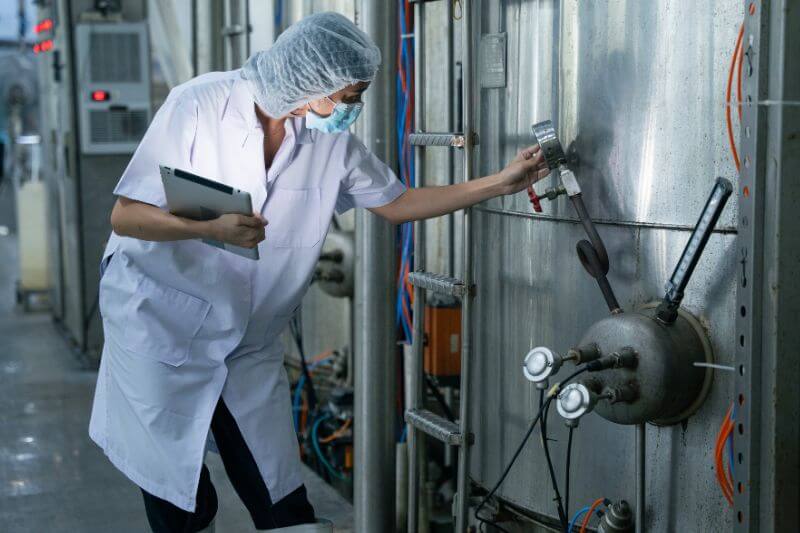
Industrial buildings often show signs of problems before those problems become expensive. Grease appearing in an unusual area, dust accumulating around equipment, recurring stains or moisture in the same location can all provide useful clues about how a facility is operating.
Experienced industrial cleaners like our team spend significant time in areas that other teams may only inspect occasionally. Over time, they become familiar with what is normal for a site and can recognise when something has changed. Cleaning therefore isn’t just about removing what is visible. It can also provide an opportunity to identify potential risks early.
What can industrial cleaning reveal about a facility?
Cleaning can reveal changes in equipment, processes and building conditions that might otherwise go unnoticed. While cleaners aren’t replacing maintenance engineers or safety professionals, they can identify visible warning signs and flag areas that warrant further investigation.
These might include:
- Recurring grease or oil around machinery
- Unusual dust accumulation
- Persistent moisture or staining
- Build-up in areas that are difficult to access
- Changes in drainage or wastewater areas
- Corrosion or deterioration
- Repeated residue around production equipment
We have previously highlighted how experienced industrial cleaners can help prevent facility failures by recognising patterns that may indicate emerging issues. The value isn’t in diagnosing the problem on the spot. It is in recognising that something has changed and making sure it doesn’t get overlooked.
What can different types of build-up tell you about industrial operations?
Not all grime tells the same story. Where and how contamination accumulates can sometimes provide clues about the processes taking place around it.
For example, recurring grease near a conveyor could indicate a maintenance issue that needs investigating. Heavy dust around ventilation equipment may point to an accumulation problem, while residue beneath machinery could indicate that an area is difficult to access during routine cleaning.
The important point is to look for patterns rather than isolated incidents. One stain may simply be a spill. The same stain appearing repeatedly in the same location tells you there may be an underlying reason.
Can repeated grime patterns reveal workflow problems?
Yes. Cleaning teams can sometimes see the physical evidence of how people, products and equipment move through a facility.
An area that repeatedly becomes dirty may be located along a high-traffic route. Persistent residue in a particular corner could indicate that equipment placement makes the area difficult to clean. If the same surfaces are consistently missed, the issue may be accessibility, scheduling or workflow rather than simply cleaning quality.
This is where cleaning observations become useful operational information. Instead of repeatedly cleaning the same problem, the business can ask why it keeps happening and whether the process itself can be improved.
What does facility condition reveal about preventative maintenance?
A facility’s condition can provide clues about whether maintenance is primarily reactive or preventative.
Reactive maintenance tends to address problems once they become obvious. By contrast, a proactive approach looks for early changes and addresses them before they escalate.
Signs worth paying attention to can include:
- New corrosion or surface deterioration
- Increasing dust or residue
- Recurring leaks or moisture
- Changes in drainage
- Build-up around machinery
- Damaged seals or surfaces
- Unusual staining or odours
These signs don’t necessarily mean equipment has failed. They are early indicators worth reporting and investigating.
Our approach to industrial cleaning as preventative maintenance recognises that it can be part of a wider asset protection strategy, rather than a purely isolated cosmetic task.
Which early warning signs do industrial teams often miss?
The biggest risks aren’t always the most obvious ones. Teams working around the same equipment every day can become accustomed to gradual changes, particularly when production pressures take priority.
Experienced cleaners may notice things such as:
Recurring residue: A surface that repeatedly needs heavy cleaning may warrant investigation into its source.
Moisture: Persistent dampness or staining can point to leaks, condensation or drainage issues.
Dust patterns: Unusual accumulation around machinery, vents or high-level areas can indicate changes that need attention.
Corrosion: Rust or deterioration may indicate prolonged exposure to moisture or contaminants.
Drainage changes: Slow drainage, standing water or recurring build-up can signal a developing drainage problem.
None of these observations should automatically be treated as a confirmed fault. They are prompts to investigate before a small issue becomes a larger one.
Why does experience matter in industrial cleaning?
One of the biggest advantages of an experienced cleaning team is familiarity with the environment. When cleaners regularly work in the same facility, they develop a baseline understanding of how different areas normally look and behave.
That makes changes easier to notice.
Our own guidance on what makes industrial cleaners skilled professionals highlights that industrial cleaning requires more than effort. It involves understanding specialised equipment, cleaning methods, workplace risks and the environments in which the work takes place.
That experience matters particularly in complex facilities where machinery, production processes, confined spaces and high-level areas can all create different cleaning and maintenance challenges.
How can cleaning observations support preventative maintenance?
The most useful approach is simple:
Clean → observe → report → investigate → address.
For example, imagine cleaners repeatedly find grease accumulating beneath the same piece of production equipment. Cleaning removes the immediate build-up, but the recurring pattern should also be reported.
The maintenance team can then investigate whether there is a leak, worn component or another source of contamination. The cleaner hasn’t diagnosed the problem, but their repeated observations have helped ensure it isn’t ignored.
That is where routine cleaning can become a valuable part of preventative maintenance.
Use cleaning as another set of eyes on your facility
A well-maintained facility isn’t one where nothing ever goes wrong. It’s one where changes are noticed, reported, and addressed before they become major problems.
A structured industrial cleaning programme can do more than keep your facility presentable. By regularly working across high-level areas, machinery, production spaces, roofs, drainage systems, and other easy-to-overlook locations, experienced cleaning teams can help identify recurring issues and potential risks early.
We provide specialised industrial cleaning services for commercial and industrial environments across New Zealand, including Auckland and Christchurch. We have been in the industrial cleaning industry long enough to know what works and what doesn’t work! Our teams work around your operational requirements to minimise disruption while helping your business protect its people, assets, and facilities.
Contact Rapid Facilities to discuss a cleaning programme tailored to your facility and its operational risks.
Frequently asked questions about industrial cleaning and facility risk
Cleaning teams can identify visible changes such as recurring residue, moisture, corrosion or unusual build-up. These observations can then be reported to the appropriate maintenance or safety team for further investigation.
Experienced teams can look for changes in moisture, staining, corrosion, drainage, residue patterns, equipment areas and other conditions that may indicate a developing issue.
They can provide useful clues. Recurring contamination in the same location may indicate high traffic, difficult access, equipment positioning or a process that repeatedly creates residue.
Regular cleaning provides more opportunities to notice changes before they become significant. It also helps control the build-up of contaminants that can contribute to equipment deterioration, hygiene problems and workplace hazards.