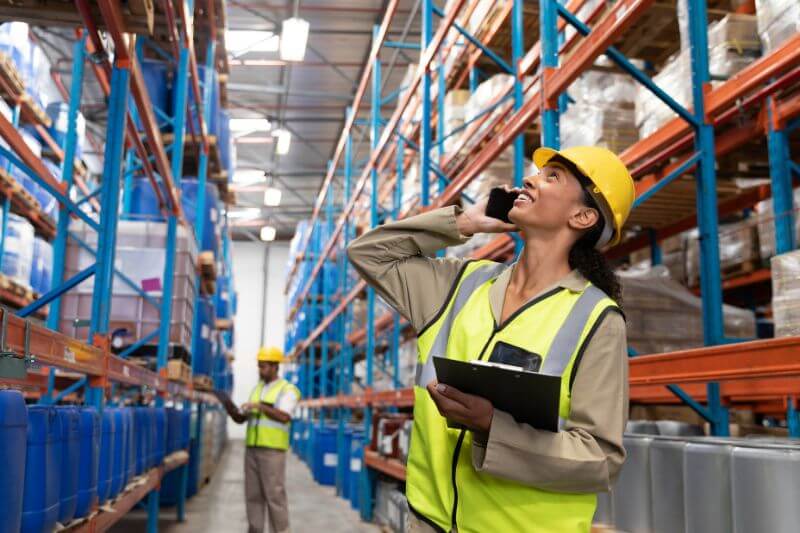
If you’re responsible for a warehouse, food processing facility, manufacturing plant or industrial site, your cleaning programme probably focuses on floors, machinery and accessible surfaces. But what about everything above them?
Beams, ducting, pipework, lighting, cable trays and ceiling structures can accumulate dust, grease, grime and residue over time. Because these areas are difficult to see and access, they can be overlooked until the build-up becomes obvious.
High-level industrial cleaning helps keep these hard-to-reach areas under control while supporting hygiene, safety and facility maintenance.
Why is high-level industrial cleaning often overlooked?
For warehouse and facilities managers, the simplest issue is visibility. When a beam or duct is several metres above the production floor, accumulated dust may not be obvious during everyday operations.
Access can also be challenging. High-level areas may require specialist equipment and trained personnel, particularly where cleaning involves working at height.
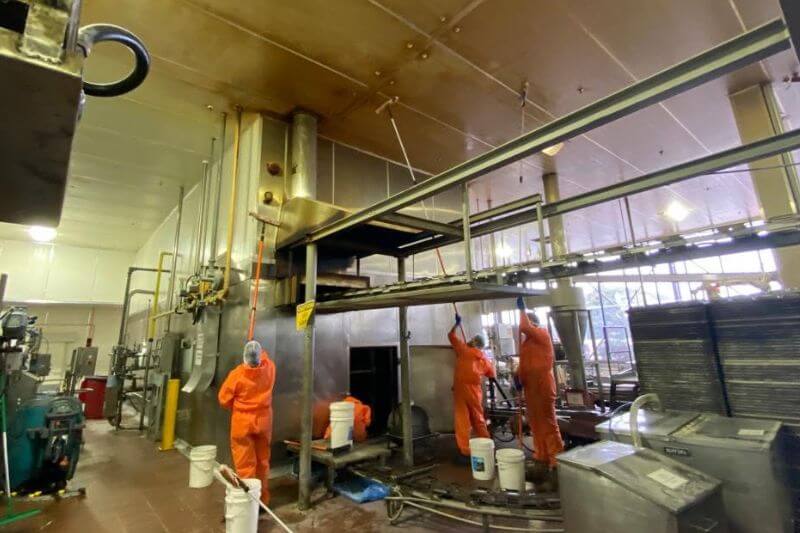
That’s why, as part of our industrial cleaning services, we provide high-level cleaning for industrial environments, including ceiling cavities, ducting, shafts, ventilation systems, machinery and other difficult-to-access areas.
The key is to treat overhead cleaning as part of your wider cleaning and maintenance programme, rather than an occasional extra.
What builds up on beams, ducting and overhead structures?
The type of build-up depends on your facility and its processes. Industrial overhead areas can accumulate:
- Dust and dirt
- Grease and grime
- Food or production residue
- Airborne particles
- Cobwebs
- Moisture-related build-up
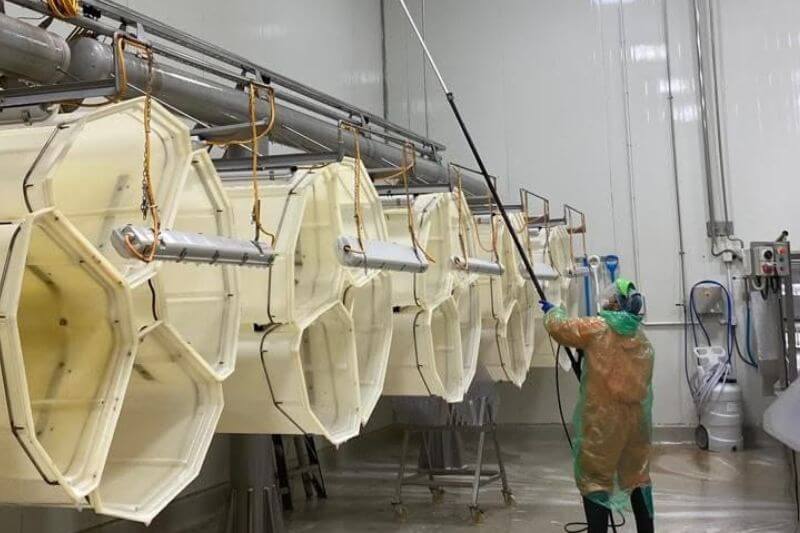
Our high-level cleaning services are designed to address dust and other material in difficult-to-reach areas using specialist equipment and extraction methods suited to the environment.
For a site manager, the important point is simple: material that is difficult to see is still part of your facility’s hygiene and maintenance environment.
What can overhead build-up tell you about your facility?
Picture a processing line running through a busy production area. The floors are cleaned daily and equipment is regularly maintained, but above the line, dust has gradually collected on beams, cable trays and light fittings.
That build-up isn’t necessarily a sign that the cleaning team is doing a poor job. It can indicate that high-level surfaces haven’t been included in the same cleaning frequency as the areas below.
For a facilities manager, this is where high-level cleaning becomes more than a cosmetic exercise. In food processing, manufacturing and packaging environments, dust and other particles can be disturbed during maintenance or other activity, making overhead build-up worth addressing, particularly above production or other sensitive areas.
High-level dust removal is an important service for large industrial facilities. The right approach is to assess overhead areas according to your facility’s processes, hygiene requirements, and the type of buildup being generated, and then include them in an appropriate cleaning schedule.
Which overhead areas should industrial facilities inspect?
For facilities and operations managers, a useful inspection starts by looking beyond the obvious. Depending on your building and operations, priority areas can include:
- Structural beams and trusses
- Ducting and ventilation systems
- Pipework
- Cable trays
- Light fittings
- Ceiling cavities
- Roof structures
- High-level equipment
- Shelving and racking
Rapid’s industrial cleaning service covers a range of these difficult-to-access areas, including ceiling cavities, ducting, shafts, ventilation systems and at-height cleaning.
The exact areas requiring attention will depend on your facility, production processes and the type of contamination being generated.
What signs indicate that overhead areas need cleaning?
Visible dust is an obvious warning sign, but it isn’t the only one.
Look for:
- Dust accumulating on beams or equipment
- Cobwebs around elevated structures
- Grease or grime
- Discolouration
- Residue around ventilation systems
- Build-up on light fittings
- Material collecting around pipework or cable trays
- Signs of moisture or deterioration
Regular inspection matters because build-up can develop gradually. Waiting until it is clearly visible from the floor may mean the area has already been accumulating material for some time.
Why does high-level cleaning matter for audit readiness?
For food processing managers and other businesses subject to hygiene requirements, overhead areas should be considered alongside the rest of the cleaning programme.
An auditor may assess whether cleaning and hygiene controls are being effectively managed. Visible build-up in areas such as ceilings, beams, ducts or ventilation systems can raise questions about whether those areas are being adequately maintained.
This is where audit cleaning can complement routine cleaning by giving additional attention to difficult or overlooked areas.
The objective shouldn’t be to make your facility look clean immediately before an inspection. A better approach is to have cleaning schedules and records that demonstrate these areas are being managed consistently.
How is high-level industrial cleaning carried out safely?
Cleaning at height introduces additional hazards and needs more planning than ordinary floor-level cleaning.
Depending on the environment, considerations can include:
- Appropriate access equipment
- Trained personnel
- Site-specific risk assessment
- Correct PPE
- Safe work procedures
- Managing falling dust or debris
- Protecting nearby equipment and production areas
- Isolation requirements where applicable
Our highly qualified teams are trained and experienced in working at heights and confined spaces, with the appropriate training, equipment, tools and knowledge required for industrial cleaning.
High-level cleaning should therefore be planned around the risks of your facility rather than treated as standard cleaning performed at a greater height.
How often should high-level areas be cleaned?
There isn’t one cleaning frequency that suits every warehouse, factory or processing facility.
The appropriate schedule depends on factors such as:
- The type of facility
- Production processes
- Dust and residue generated
- Hygiene requirements
- Building design
- Previous inspection findings
- Accessibility
A facility generating significant airborne dust may require more frequent attention than an environment with relatively little airborne contamination.
A risk-based schedule allows you to focus cleaning resources where they are most needed rather than applying the same frequency across every area.
We’re happy to advise on what best suits your facility. To book a site visit or quote, visit here.
Don’t overlook what’s overhead
High-level cleaning shouldn’t be something you remember only when the dust becomes obvious. Done properly, it can help you stay on top of hard-to-reach areas, spot issues early and keep your facility operating to the standard you expect.
We’re experienced specialists in industrial cleaning across New Zealand, including Auckland and Christchurch. Do It Once, Do It Right.
Call 0800 372 743 for a chat to see how we can assist, and let’s get your facility’s hard-to-reach areas under control.
Frequently asked questions
High-level industrial cleaning involves cleaning elevated and difficult-to-access areas such as beams, ceilings, ducting, pipework, ventilation systems and other overhead structures.
Overhead areas can accumulate dust, grime, grease and other residue that may otherwise remain unnoticed. Including them in an appropriate cleaning programme helps prevent these areas from being overlooked.
Frequency depends on the facility, production processes, contamination levels, hygiene requirements and previous inspection findings. A risk-based schedule is more appropriate than applying the same frequency to every facility.
It can form part of a broader hygiene programme in food processing and other hygiene-sensitive environments. Rapid provides high-level cleaning of areas including ceilings, vents, lighting, ducts and beams as part of its food manufacturing cleaning services.