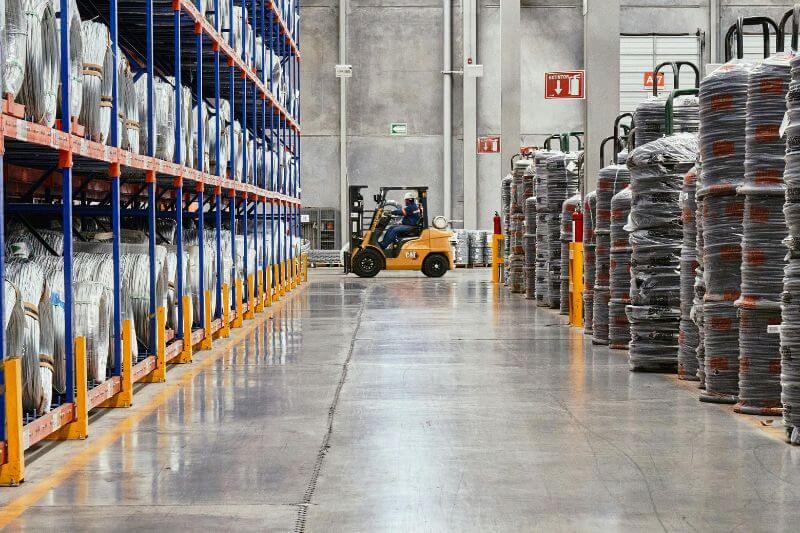
Your shutdown window is the only time all year you can get at the things production normally blocks. It’s also fixed, immovable, and shorter than it looks once you account for setup, cure times and the fitters who need the same machine you do.
Most shutdown problems aren’t caused by work being skipped. They’re caused by work being done in the wrong order, or by nobody deciding who gets the plant first.
If your site closes mid-December, the scoping conversation needs to happen in the next fortnight. Shutdown slots fill fast, and a contractor booked in December is working to your constraints rather than planning around them.
In short: A shutdown checklist is a sequence, not a list of areas. The questions that matter are what has to happen before the plant goes down, who gets access in what order once it’s off, and what has to be verified before production restarts. Get the order wrong and you pay for the same job twice.
What makes shutdown cleaning different from a routine clean?
Access. During a shutdown you can reach confined spaces, work directly over production lines, strip and recoat floors, and get inside equipment that is live every other week of the year.
We’ve covered the areas worth prioritising in best practices for shutdown or holiday industrial cleans, so this piece assumes you know what needs doing. The harder question is the order it happens in, and that’s what tends to go wrong.
What needs to happen before the shutdown starts?
Everything that determines whether the window is usable. None of it can be done once the plant is already down.
- Scope the work on site, not over the phone, so the quote reflects the actual surfaces, contamination and access
- Confirm which areas need isolation, who performs it, and when it will be signed off
- Agree the access equipment required and book it, since platforms get scarce in December
- Establish who holds site access over the closedown and who can authorise variations
- Confirm induction requirements for any contractor crews
- Decide what “finished” looks like, and what evidence you’ll accept
That last one matters more than it sounds. A shutdown clean that nobody verified is a shutdown clean you’ll be arguing about in February.
Why does the order of cleaning and servicing matter?
Because cleaning and mechanical work compete for the same machine, and doing them in the wrong sequence means doing at least one of them twice.
The general principle is that cleaning comes before inspection and before recommissioning. Degreasing and residue removal expose wear, cracks and leaks that nobody can see through a layer of grime, which means your fitters are inspecting the actual condition of the equipment rather than guessing at it. Clean afterwards instead and you’re washing down a machine someone has just had their hands inside.
There are exceptions. Work that generates its own mess, grinding, welding, coating repairs, has to happen before the final clean rather than after it. The practical answer is usually two passes: a heavy clean early to open everything up, and a lighter finishing clean once the mechanical work is done.
Either way, someone has to own the sequence. In most sites nobody does, and the order gets decided by whoever turns up first.
Which jobs can only be done while the plant is off?
The ones that need the equipment stopped, the space empty, or time to cure. These are the jobs that justify the shutdown window, and the ones to protect if the schedule tightens.
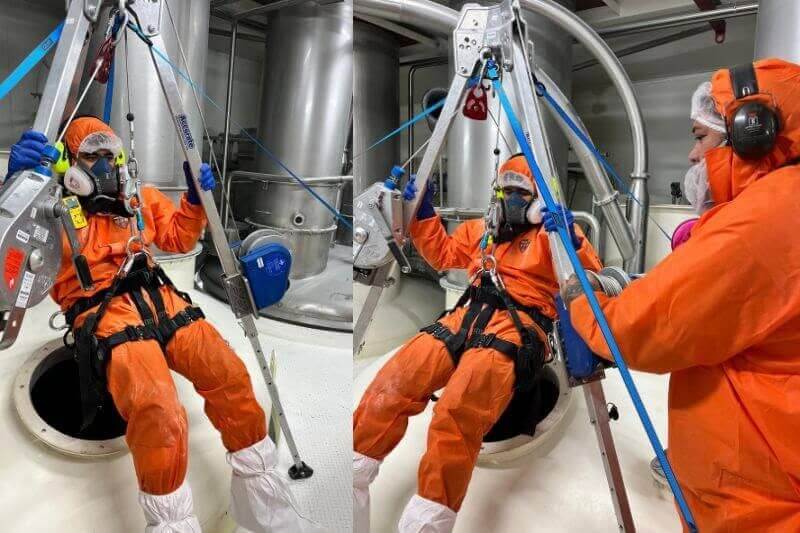
- Confined space entry, including silos, tanks and ducting
- High-level work directly above production lines, where there is no safe way to work over a running process
- Internal cleaning of equipment that cannot be opened while live
- Floor stripping, resealing and floor coating work that needs cure time before traffic returns
- Deep cleaning of extraction systems and ductwork
Confined spaces and work at height both carry their own controls, and WorkSafe New Zealand treats the latter as a priority area. A contractor who isn’t trained for both will quietly leave those jobs on your list.
How long does the work actually take?
Longer than the cleaning itself, because the clock includes everything around it.
| Often forgotten | Why it eats the window |
| Access setup and teardown | Platforms and scaffold take time at both ends |
| Isolation and sign-off | Can’t start until it’s done and verified |
| Cure and dry times | Floor coatings need traffic-free hours, not minutes |
| Two-pass cleaning | Heavy clean, mechanical work, finishing clean |
| Verification | Inspection and reporting at the end |
Build those into the plan and the schedule holds. Leave them out and you discover on day four that the floor can’t take forklifts until Wednesday.
What has to be true before you restart production?
The site has to be verified, not just finished. These are different things, and the gap between them is where most restart problems live.
Before the line runs again:
- All chemicals, absorbents and consumables removed from production areas
- Access equipment struck and cleared from traffic routes
- Isolations removed and signed off by the person who applied them
- Floor coatings fully cured and rated for the traffic they’re about to take
- Drains and sumps clear and flowing
- Food contact surfaces verified to the standard your audit requires
- A written record of what was done, with photographs
That last point is worth insisting on. Detailed reporting and photographic evidence after a shutdown clean gives you something to hand an auditor, something to compare against next year, and something to point at if a question comes up in six months. It also feeds straight into your planning, which we looked at in where industrial cleaning belongs in your asset management plan
Where shutdowns usually come unstuck
The pattern is consistent. The work was scoped from a phone call rather than a site visit, so the quote didn’t match the job. Nobody agreed whether cleaning or servicing went first, so both teams arrived on the same morning for the same machine. The access equipment was booked late and arrived a day behind. And the restart happened because the calendar said so, not because anyone verified the site was ready.
None of those are cleaning failures. They’re planning failures, and all four get solved in November. We looked at the quoting side of this in why some industrial cleaning jobs take three visits instead of one.
Book your shutdown scope before the December rush
Rapid Facility Services plans shutdown work around your maintenance and production schedules rather than against them, and our PREQUAL certified teams are trained and experienced in both confined spaces and work at height, so nothing gets left on your list.
We operate 24 hours a day, every day of the year, including public holidays, from branches in Auckland and Christchurch with nationwide coverage. Shutdown slots do fill fast.
Call 0800 372 743 or book a site visit for a free estimate while there’s still room to plan properly. We’d rather scope it in November than improvise it in January.
Do it once, do it right.
Frequently asked questions
When should I book shutdown cleaning in New Zealand?
Six to eight weeks before the window opens, so for a late-December shutdown that means early November. Booking later usually means working around whatever access equipment and crew availability is left.
Should cleaning happen before or after equipment servicing?
Generally before, because degreasing exposes the wear, cracks and leaks your fitters need to see. Where mechanical work generates its own mess, plan two passes: a heavy clean first and a lighter finishing clean once servicing is complete.
What should a shutdown clean include that a routine clean doesn’t?
Anything that requires the plant to be off: confined space entry, work directly above production lines, internal equipment cleaning, and floor and coating work that needs cure time. These are the jobs the window exists for.
How do I know the work was actually completed to standard?
Agree the standard and the evidence before work starts, then ask for written reporting with photographs at the end. It gives you something to show an auditor and a baseline to plan next year’s shutdown against.